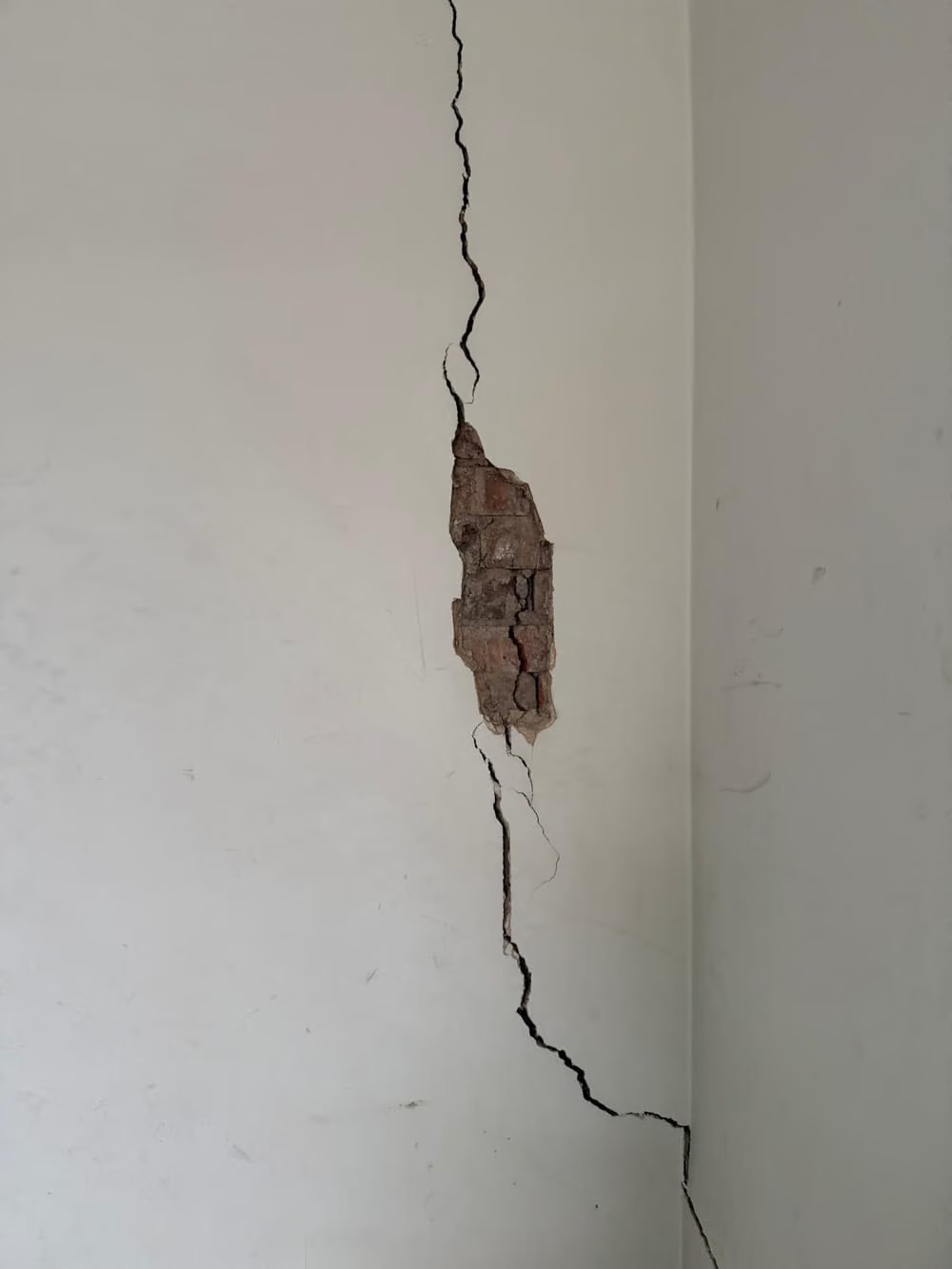
How do I know if my house has subsidence?
Subsidence is suggested by diagonal cracks that taper, wider at one end, starting at a corner of the building or the corner of a door or window, running through brickwork and plaster and often continuing below the damp-proof course, together with doors and windows that begin to stick and rippling wallpaper at wall and ceiling junctions. Not all cracks indicate subsidence, so an engineer-led inspection is needed to distinguish active structural movement from harmless settlement or thermal cracking.
Is subsidence always serious?
No. Many cracks are caused by minor settlement, thermal movement or shrinkage and are not structurally significant. Subsidence becomes serious when movement is progressive and affects the foundations. The purpose of an assessment is to confirm whether movement is active, identify the cause and decide whether monitoring or repair is required.
Do I need underpinning?
Underpinning is only one of several possible outcomes and is not always necessary. Where the cause can be removed, for example a leaking drain or vegetation, stabilisation may follow without underpinning. Underpinning is considered when foundations have been undermined and movement cannot otherwise be halted. We recommend it only when the evidence supports it.
Should I tell my insurer?
Subsidence is usually covered by buildings insurance, and most policies require you to notify your insurer once subsidence is suspected. We can provide a clear structural assessment to support your claim and help you understand the cause and likely repair strategy before works begin.
How is the cause of subsidence confirmed?
The cause is confirmed by combining a visual inspection with monitoring of crack movement over time and, where needed, intrusive investigation such as trial pits to expose the foundations, soil sampling and a drainage survey. This evidence identifies whether clay shrinkage, drainage leaks, trees or made-up ground are responsible before a repair strategy is set.
How long does subsidence monitoring take?
Typically six to twelve months, because a full summer and winter are needed to tell seasonal movement, which points to trees and clay, from progressive movement, which points to a leaking drain or soft ground. Crack widths are read from fixed studs with a digital calliper to a tenth of a millimetre, and level readings are taken along the brick courses every six to eight weeks. On an insurance claim the insurer normally funds the monitoring and it can run longer. Repairs are only specified once the readings show movement has stopped.
What do I receive at the end of a subsidence repair?
A written record that the cause was found and dealt with: the investigation report, the repair specification, the Building Regulations completion certificate where underpinning was carried out, the contractor's guarantee, and a Certificate of Structural Adequacy from the engineer confirming the cause, the works, the approvals and the inspections. Together these are what insurers, lenders and a future buyer's solicitor will ask to see.
How much does a subsidence survey cost?
At EMA Structures a subsidence assessment, covering the inspection, a record of every crack, a level survey along the brick courses, a diagnosis of the likely cause and a full written report, costs £495 to £895 plus VAT depending on the size of the property and the type of movement. Where monitoring is needed, installing the crack studs and level markers and taking three seasonal readings costs £1,200 to £2,000 plus VAT, with further visits at £350 plus VAT each. Trial pits and drain surveys are quoted separately, and on an accepted insurance claim the insurer normally funds the investigation and monitoring. Fees correct as of September 2026 and confirmed in writing before the visit. See our full fees guide.