Home buyer structural inspections
Independent engineering assessment before you commit to a purchase, with clear advice on severity, cause and likely cost.
Structural inspections and reports for buyers, homeowners, landlords, businesses and property professionals.
A structural survey gives you an independent engineering view of whether a defect is serious, what is likely causing it and what to do next.
Request a structural survey whenever the structure itself is in question, when you can see cracking, signs of movement or settlement, suspected subsidence, bulging or leaning walls, sagging floors or roofs, or before buying, altering or extending a property. A structural engineer inspects the building, diagnoses the likely cause, and advises whether the issue is cosmetic or structurally significant, and what action is required. If you are preparing to sell rather than buy, a pre-sale structural survey answers the same questions before they are raised by a buyer's surveyor.
We produce clear, practical structural reports tailored to who is reading them and the decision they need to make.
From a single worrying crack to whole-building movement, we diagnose the likely cause before any repair is considered.
Independent engineering assessment before you commit to a purchase, with clear advice on severity, cause and likely cost.
Reassurance and diagnosis when something has changed in your home, new cracks, sticking doors or sloping floors.
Assessment of crack width, pattern and direction to distinguish cosmetic cracking from active structural movement.
Investigation of suspected subsidence, including likely causes such as ground conditions, drainage or nearby trees.
Diagnosis of settlement, heave, thermal movement and lateral spread, with monitoring advice where needed.
Inspection of bulging, leaning, cracked or spalling masonry, lintels, arches, chimneys and wall ties.
Assessment of cracking, spalling, reinforcement corrosion and deflection in concrete slabs, beams and frames.
Checks on leaning, cracking, bulging or overturning retaining walls and the ground they support.
Diagnosis of foundation-related movement and advice on whether intrusive investigation or underpinning is needed.
Assessment of sagging, bouncing or overloaded floors and roof structures, and whether strengthening is required.
Structural inspection of commercial and mixed-use property for owners, landlords and managers.
Targeted structural appraisals before a purchase, alteration, extension or change of use.
Some defects cannot be diagnosed with confidence from a visual inspection alone. Where the cause of movement is uncertain, intrusive investigation provides the evidence needed to specify the right repair.
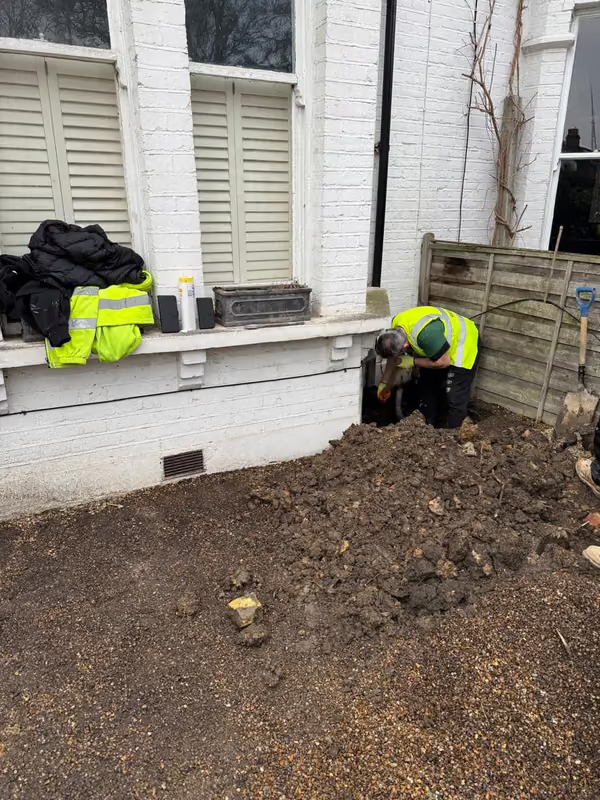
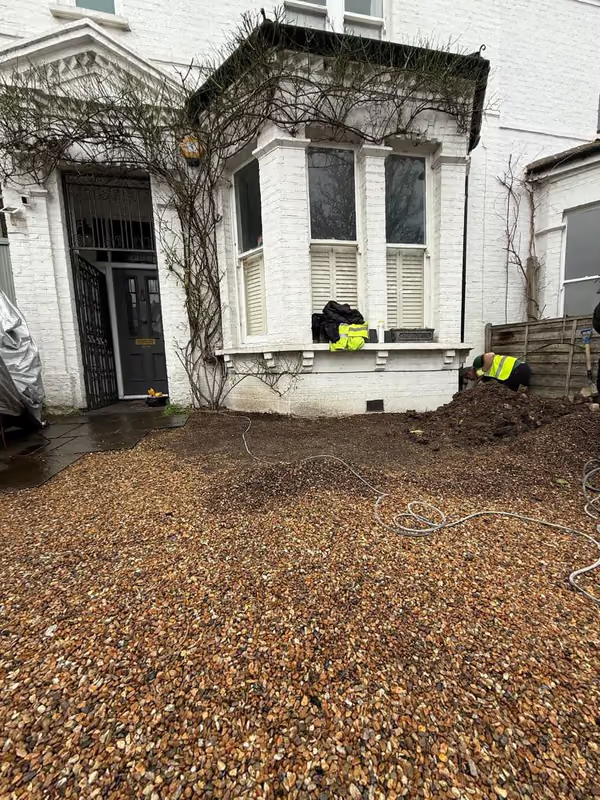
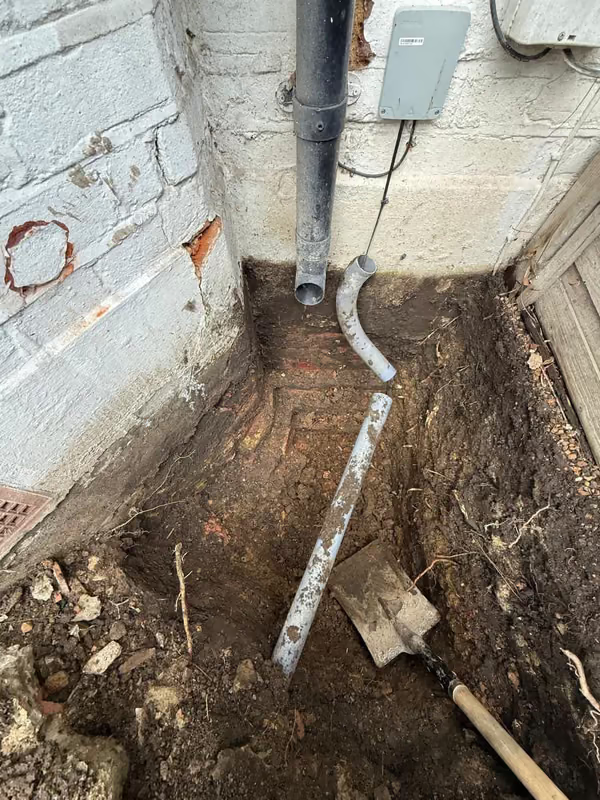
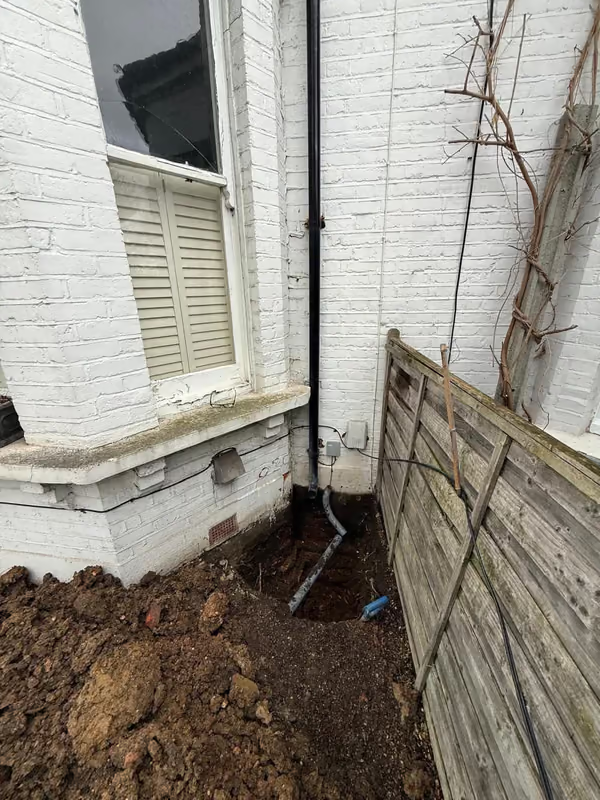
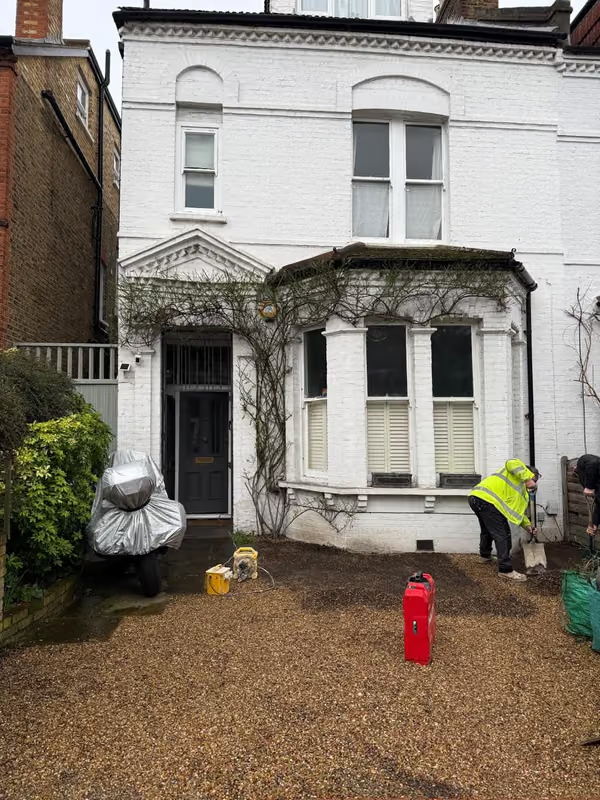
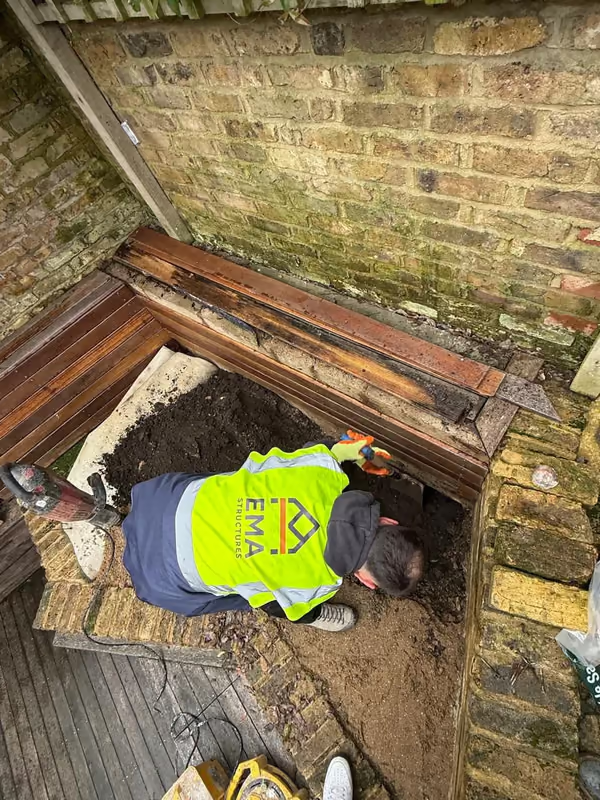
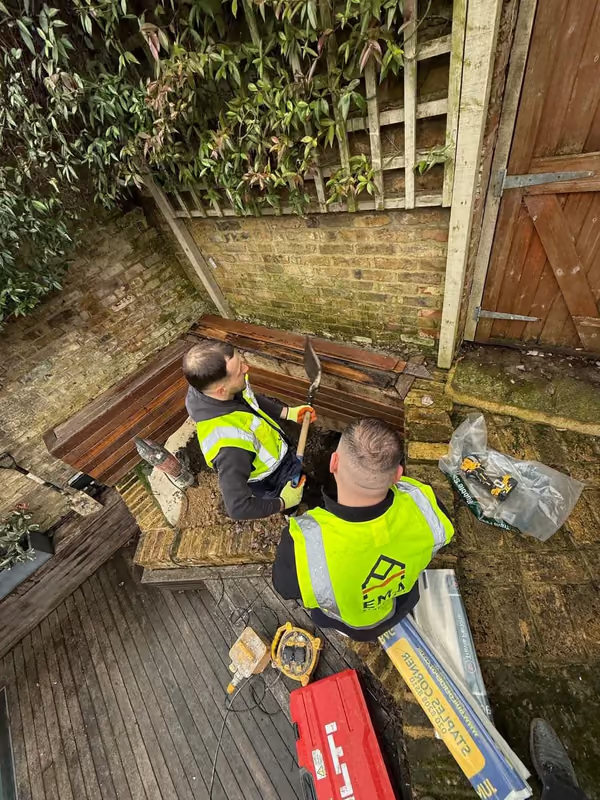
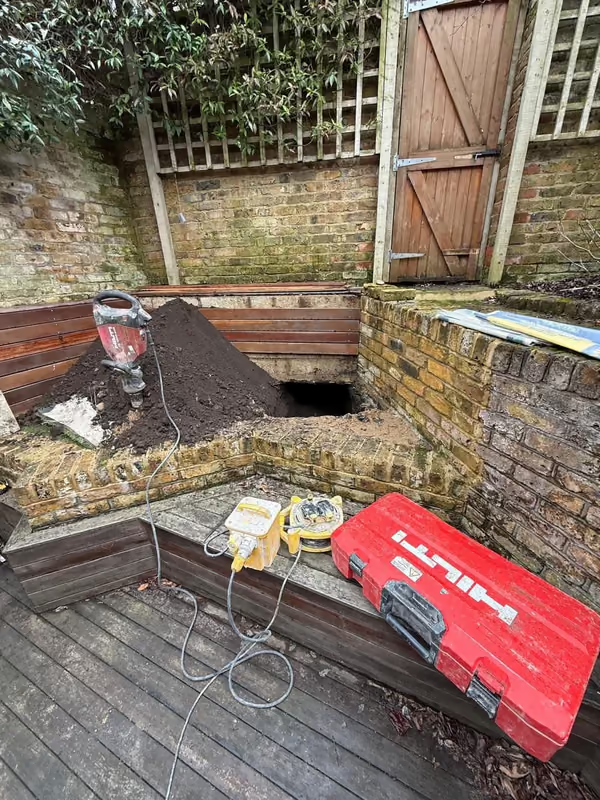
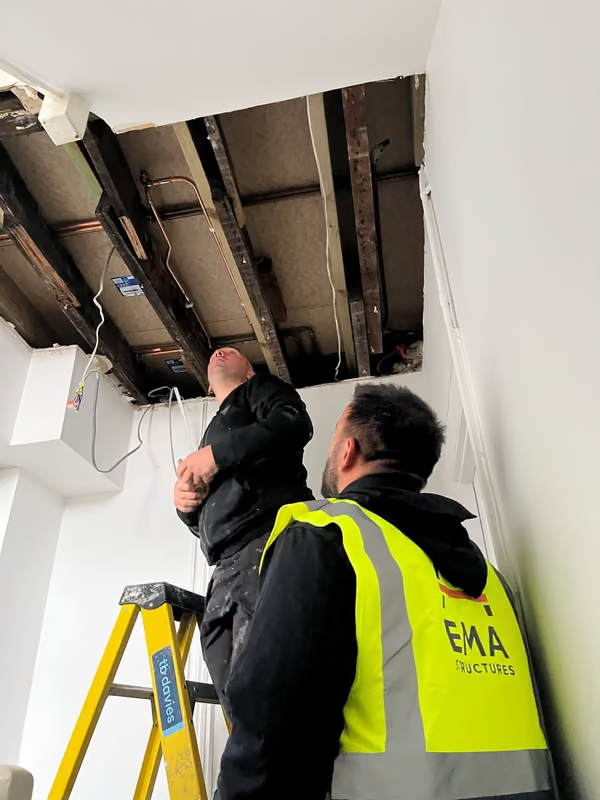
Trial pits are excavated next to foundations to confirm their depth, type and condition and to assess the underlying ground and any influence from drainage, trees or made ground. Opening-up works expose concealed structure, beams, lintels, wall ties, connections or hidden corrosion, so the true condition can be assessed rather than assumed.
We advise when intrusive investigation is justified, coordinate the works, and interpret the findings so you move from uncertainty to a clear, evidence-based diagnosis and a buildable repair strategy. This avoids the common and costly mistake of repairing a symptom while the underlying cause continues.
Discuss a Subsidence Concern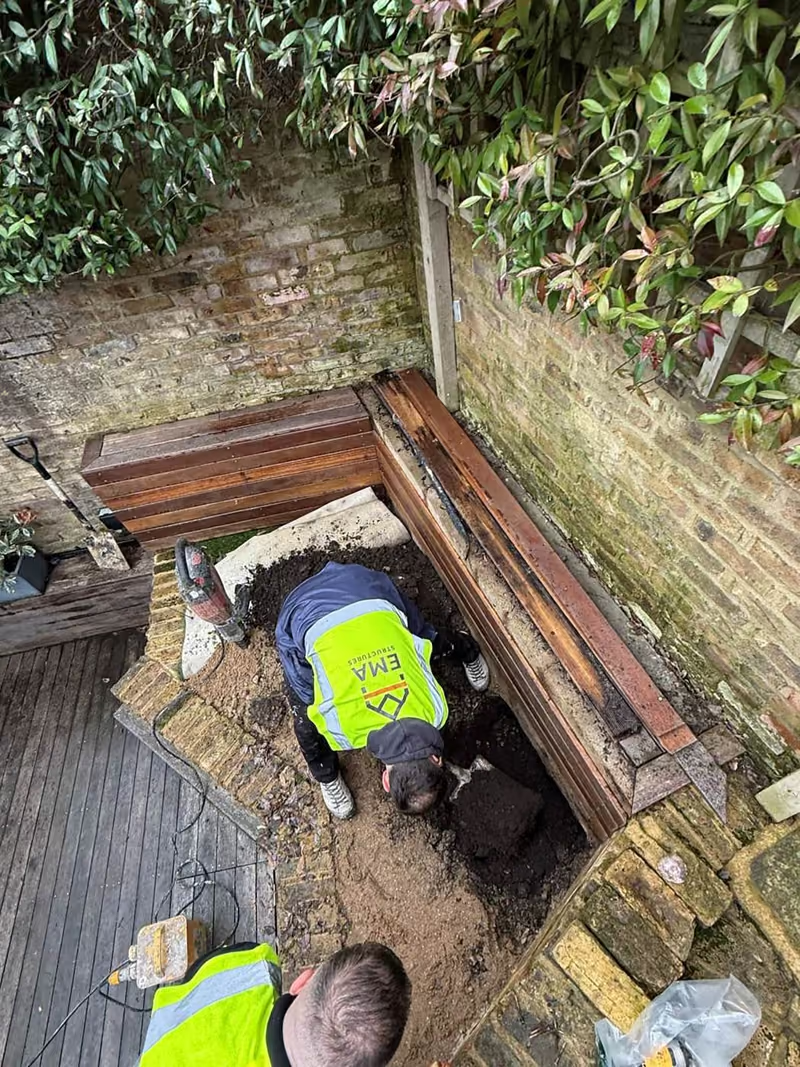
A clear, useful engineer's report that leads to a decision, not a long list of caveats.
A record of what was inspected, the property's construction and its relevant history.
The defects and observations found on site, supported by photographs and crack categorisation.
The likely cause of the cracking, movement or defect, and its structural significance.
An honest assessment of how serious the issue is and whether it is active or historic.
Clear advice on monitoring, further investigation or repair, with a repair strategy where appropriate.
A practical route forward, including who can carry out any works and how EMA can support them.
Once a defect is diagnosed, EMA can take you through to a practical, engineering-led repair.
Engineer-led inspections for cracks, movement and suspected defects.
Learn moreSubsidence and movement assessment, monitoring advice and repair strategy.
Learn moreStructural versus non-structural crack diagnosis, stitching and repair.
Learn moreRepair of cracked, spalling or corroding concrete elements.
Learn moreEngineering-led remediation, strengthening and contractor coordination.
Learn moreStructural surveys with EMA Structures, key facts:
A building survey is a broad condition report on a whole property, usually produced by a surveyor and covering everything from roofs and damp to joinery. A structural survey is a focused engineer-led assessment of the structure itself, cracks, movement, foundations, walls, beams and defects, diagnosing the likely cause and advising whether action is needed. Buyers often commission a structural survey when a building survey flags a structural concern.
Not every purchase needs one, but a structural survey is strongly advisable where there are visible cracks, signs of movement, suspected subsidence, previous underpinning, extensions or older masonry. It gives an independent engineering view of whether a defect is serious, what is likely causing it and what it could cost to put right, useful for negotiation and peace of mind.
Our reports set out what was inspected, the defects and observations found, the likely cause, an assessment of severity and structural significance, and clear recommendations for any further investigation, monitoring or repair. Where useful we include photographs, crack categorisation and a practical next step rather than a long list of caveats.
In most cases, yes. We assess crack width, pattern, location and direction alongside the building's construction and history to judge whether cracking is cosmetic, settlement-related or a sign of ongoing structural movement such as subsidence. Where the cause is unclear, we may recommend monitoring or intrusive investigation before committing to a repair.
Yes. Where the cause of movement cannot be confirmed from a visual inspection, we can arrange intrusive investigations such as trial pits to expose foundations and ground conditions, and opening-up works to inspect concealed structure. This evidence allows the defect to be diagnosed accurately before a repair strategy is specified.
At EMA Structures a site advice visit for one limited question, with a short written email summary, costs £265 plus VAT (larger or more complex scopes quoted separately), a structural inspection of a single defect with a full written report costs £495 plus VAT, a full structural survey of the whole property costs £495 to £1,500 plus VAT depending on its size, and a subsidence assessment costs £495 to £895 plus VAT depending on the property and the type of movement, all correct as of September 2026 and confirmed by written quotation. Quotes for a full structural survey across London commonly range from around £500 to £1,500 depending on the firm and the property.
Yes. A specific defect report focuses on one issue, a crack, a bowing wall, a sagging floor or suspected movement, and sets out the likely cause, its severity and the recommended action. It is often all a homeowner or buyer needs when a single defect is in question, and it costs less than a full structural survey.
Send us photos and a few details, or book an engineer-led inspection, and we will advise whether it is serious and what to do next.