Underpinning: When Is It Needed?
Underpinning is often feared and frequently misunderstood. Here is when it is genuinely needed, when it is not, and how to find out which applies to your property.
Underpinning is needed when a building's foundations can no longer adequately support it, usually because of ongoing ground movement that has caused, or is likely to cause, significant structural distress. It is the right remedy only after investigation confirms genuine foundation movement and rules out a simpler cause. In practice, most cracked properties do not need underpinning: many cases are resolved by fixing a leaking drain, removing or managing nearby vegetation, or by less disruptive repairs. Underpinning is also used proactively when foundations must be deepened, for example beneath a new basement.
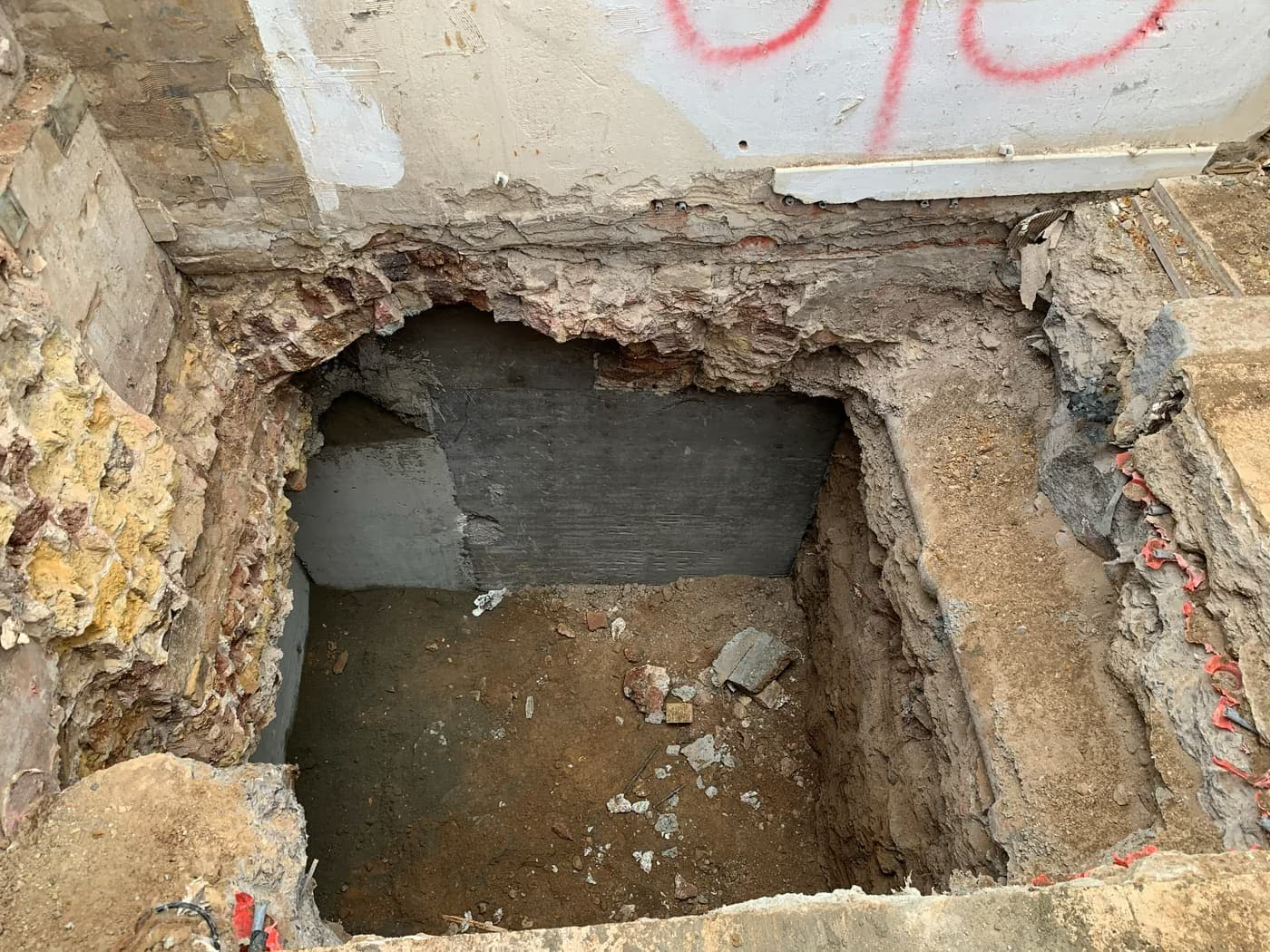
What underpinning actually does
Underpinning strengthens or extends a building's existing foundations, usually by taking them deeper to reach more stable ground or to increase their bearing area. It is a significant, disruptive operation, so it should only be carried out when the evidence justifies it. The temptation to underpin "just in case" should be resisted: unnecessary underpinning is costly, can introduce new stresses, and may even create a future weak point at the junction between underpinned and original foundations.
Signs that may point to foundation movement
The classic warning signs include diagonal, tapering cracks that are wider at the top, cracks running through brickwork rather than just plaster, doors and windows that stick or no longer close, and sloping floors. However, these symptoms have many causes. Thermal movement, shrinkage, expansion of materials and historic settlement all produce cracks without any active foundation problem. Our guides on when cracks are structural and the signs of subsidence in London homes help you read the symptoms more carefully.
Common causes of foundation movement
- Clay shrinkage and subsidence, London's clay soils shrink in dry conditions, often made worse by tree roots drawing out moisture.
- Leaking drains, escaping water can wash out or soften the ground beneath a foundation.
- Heave, clay swelling after a tree is removed, the opposite of subsidence and the one case where underpinning is designed to resist uplift.
- Inadequate or shallow foundations, common in older or extended properties.
- Nearby excavation or made ground, disturbance from adjacent works or poorly compacted fill.
Crucially, the cause dictates the cure. If a leaking drain is the problem, repairing the drain may stop the movement and underpinning may never be required. This is why diagnosis comes before any decision to underpin.
How an engineer decides whether you need it
A structural engineer establishes whether movement is active and what is driving it before recommending anything. The typical process is:
- Structural inspection and crack assessment
- Level and crack monitoring over time
- Drain testing where leakage is suspected
- Trial pits to inspect the foundations and ground
- Soil sampling and root identification where relevant
- A diagnosis and proportionate repair strategy
The order of work matters as much as the tests. Current guidance from the Institution of Structural Engineers is to establish first whether the building is basically stable, then to stabilise the ground by dealing with drains, trees or moisture, and only if movement still continues to consider the foundations. Monitoring is key: crack readings from fixed studs with a digital calliper, and level readings along the brick courses every six to eight weeks, typically for six to twelve months, tell seasonal movement (trees) from progressive movement (drains, soft fill). If cracks are stable and not progressing, underpinning is rarely justified. To understand the intrusive investigation stage, see our explainer on trial pits and opening-up works.
Methods of underpinning
No method is chosen without a site investigation. Trial pits beside the footing record its depth and what it bears on, a hand auger takes the hole to around 3 m, and where piles are likely the ground is proved to at least half as deep again as the expected pile length. The method then follows the depth to good ground, the soil, the access and the cause.
Traditional mass-concrete underpinning
The existing footing is extended downward by excavating and casting concrete in short sections of about a metre in a hit-and-miss sequence, so no more than a third of the wall is unsupported at any time. Each pin is taken at least 150 mm into the bearing stratum and, where live roots are found, around 600 mm below them. The concrete is stopped 75 mm below the old footing and the gap rammed with a semi-dry mortar the following day, the "dry pack" that actually transfers the load; poorly done dry packing is the commonest reason underpinning fails. On London Clay the concrete is specified sulphate-resisting, and the pins are keyed to one another so they act as a continuous footing. It is the method for most domestic cases to about 2.5 m deep; beyond that, putting people at the bottom of a deep pit is a risk in itself, and piles are safer, usually cheaper and produce far less spoil.
Beam and base
Deep concrete pads are formed at intervals of roughly 2.5 to 3 m beneath the wall, down to firm ground typically 2 to 2.5 m below the surface, and a reinforced concrete or steel beam is cast through or beneath the wall to span between them. It suits heavier loads and variable ground, and the design must allow for roots reaching beneath the beams and for water tracking down the backfill.
Piled underpinning
Mini-piles of 300 mm diameter or less carry the load to a deeper, stronger stratum. They can be augered (the usual choice in clay), driven (fill, gravels and wet ground), drilled through obstructions, screwed, or jacked into the ground against the weight of the building, which is vibration-free and proves the load on every pile as it goes in. The piles are connected to the wall by needle beams through it, by a beam beneath it, by cantilever beams from one side where access is restricted, or by a reinforced raft toothed into the walls. Where a tree has been removed and the clay is expected to swell, the piles are designed for the uplift, sleeved in their upper length, and any beams sit on a compressible void former so the ground can heave beneath them without lifting the house.
Resin injection
Expanding geopolymer resin injected through small tubes compacts granular soils, fills voids and can close fissures in clay, and it can lift a slab or a wall back towards level with almost no excavation. It is a specialist technique with a specific place: it needs both a ground investigation and a structural appraisal first, live level monitoring while injecting, clearance from drains and services, and post-treatment testing to prove the ground has improved. It is not the answer to a persistent cause such as a still-leaking drain or an unmanaged tree.
Partial underpinning
Most underpinning is partial, and that is normal practice, not a compromise. Subsidence from a tree or a drain usually affects one corner or one elevation, and foundations that have not moved will not start moving once the cause is fixed, provided the loads and the structure are not altered and the trees are managed. The end of the underpinned length is stepped with transition pins so there is no sudden change in foundation depth. Occasionally the engineering answer for a terrace is to let it keep settling uniformly rather than pin one house and create a step.
Approvals, guarantees and the certificate
Underpinning is building work under the Building Regulations and needs an application and inspections. Pinning a party wall, or excavating within 3 m of a neighbour's building to a depth below their foundations, triggers the Party Wall etc. Act 1996, with notices and usually an award before work starts. On completion, expect a contractor's guarantee, for which ten years is now the norm and insurance-backed is better than a bare company promise, and a Certificate of Structural Adequacy from the engineer recording the cause, the works, the approvals and the inspections, with as-built drawings. That certificate is what insurers, lenders and buyers' solicitors will ask for; our guide to subsidence insurance claims covers how the insurance side runs where underpinning is claimed for.
The right first step
If you are worried, do not start with underpinning, start with diagnosis. An engineer-led subsidence assessment or structural survey will tell you whether anything is actually moving and, if so, the most proportionate remedy. Where underpinning is genuinely required, our underpinning service covers design and the engineering oversight needed to do it safely.
Underpinning questions
Is underpinning always necessary if my house has cracks?
No. Most cracks are not caused by failing foundations and most properties with movement do not need underpinning. Underpinning is only justified once monitoring and investigation confirm ongoing foundation movement that cannot be resolved by addressing its cause, such as a leaking drain or vegetation.
How do I know if I need underpinning?
You cannot know from the cracks alone. A structural engineer will inspect the property, often arrange level monitoring and trial pits to assess the foundations and ground, and identify the cause of movement. Underpinning is recommended only when the evidence shows it is the correct remedy.
What does underpinning involve?
Traditional mass-concrete underpinning extends the existing foundations deeper in short, controlled sections of about a metre cast in sequence, with no more than a third of the wall unsupported at a time, and is the usual method to around 2.5 m deep. Other methods include beam-and-base, mini-piled underpinning for deeper or heavier cases and, in suitable ground, resin injection. The right method depends on the ground, the loads and the cause of movement, which is why a site investigation always comes first.
Is partial underpinning acceptable?
Yes. Most underpinning is partial, because subsidence from a tree or a leaking drain usually affects one corner or one elevation. Foundations that have not moved are left alone once the cause is fixed, and the end of the underpinned length is stepped with transition pins so there is no sudden change in depth. Lenders and insurers accept properly designed partial underpinning; what they want is evidence that the cause was found and the movement has stopped.
Does underpinning need Building Regulations approval?
Yes. Underpinning is defined as building work under the Building Regulations, so it needs an application, inspection of the excavations before they are concreted and a completion certificate. Pinning a party wall, or excavating within 3 m of a neighbour's building to below the level of their foundations, also brings in the Party Wall etc. Act 1996, which means serving notice and usually agreeing an award before work starts.
What guarantee should underpinning come with?
A ten-year guarantee is now standard and matches the period of the main new-build warranties; problems, if any, usually show within three to five years. A bare company guarantee is only as good as the company issuing it, so ask whether it is insurance-backed. Alongside it you should receive the engineer's Certificate of Structural Adequacy and as-built drawings, which together are what a future buyer's solicitor will ask for.
What is a Certificate of Structural Adequacy?
The engineer's formal opinion, issued after the works, that the underpinned part of the building is structurally adequate. It records the damage, the cause established by investigation, the stabilisation measures and the remedial works, and confirms that a competent contractor was used, that the engineer designed or reviewed the scheme, that Building Regulations approval was obtained and that the works were inspected. It is not a warranty, but insurers, lenders and conveyancers rely on it.
Worried your foundations are moving?
Send us photos of the cracking and we will advise whether monitoring, investigation or underpinning is the right next step, no alarmism.